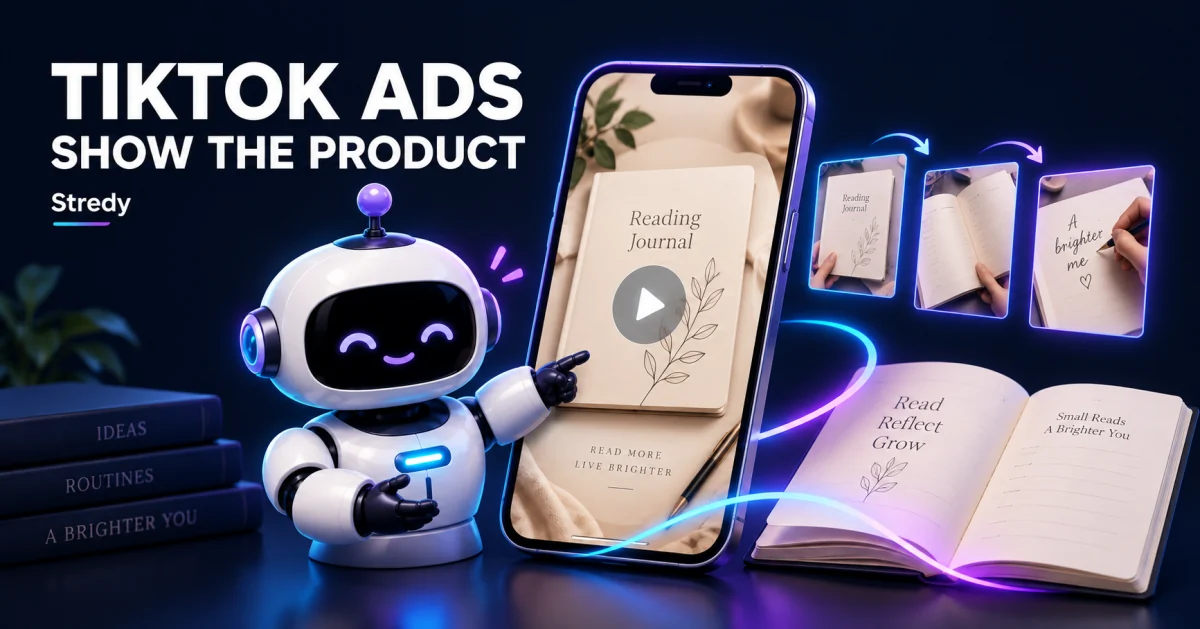
TikTok ads for digital products should make the download understandable while it is being used. Show the page, the input or the decision it helps with. A video about “passive income” attracts a different conversation from a video showing a buyer how a useful reading journal works.
Website sales and TikTok Shop are not interchangeable
TikTok offers website-sales advertising that directs people to an external destination. Its Sales objective documentation also describes different destinations and a staged rollout, so the exact interface can vary by account. Confirm the destination available to you rather than copying an old screenshot. Website-sales documentation and Sales objective guidance.
For TikTok Shop in the United States, the Virtual Goods Requirements dated September 1, 2026 describe an invite-only program requiring seller approval. This is not automatic permission to list a PDF planner. Verify your seller eligibility and product category directly before planning an in-Shop launch. TikTok Shop’s US virtual-goods requirements.
Do not use an external-site ad tutorial as instructions for redirecting a Shop transaction away from Shop checkout. Pick the route, read its rules and build the corresponding delivery process. Eligibility also depends on the product, location and account; the existence of an ad format is not approval of every offer.
Choose a product action worth showing
A strong demonstration has a small beginning, middle and end. Someone needs to organise something; the file supplies a structure; the viewer sees what has been completed. The result should be visible inside the product, without an exaggerated claim about the buyer’s future.
Planner
Move three real tasks into a weekly page and show the space left for writing.
Workbook
Answer one prompt and show how the answer informs the next exercise.
Spreadsheet
Enter a clearly labelled sample input and show the tested calculation updating.
For a printable reading journal, the visible action could be choosing the next book from a shortlist. For a moving workbook, it could be recording a doorway measurement before considering furniture. These are creative concepts, not measured demand claims. Choose the one your actual product can demonstrate truthfully.
If your download cannot support a short, specific demonstration, inspect the product before inventing more energetic ad copy. It may need clearer instructions, a stronger first page or a more focused buyer task.
A 20-second storyboard you can adapt
This original example assumes a printable reading journal with a shortlist, brief review page and borrowed-book log. Replace the pages and wording with your actual contents. The timings are an editorial proposal, not an optimal-length claim.
- 0–3 seconds · The task
Show a few handwritten book recommendations beside the printed shortlist. On-screen text: “Which book was I going to read next?” Keep the setup recognisable without showing private messages.
- 3–8 seconds · The action
Fill in one shortlist row: title, reason to read and where the recommendation came from. Let the camera stay long enough for the viewer to understand the fields.
- 8–13 seconds · The product
Turn to a short review page. Show a clearly labelled example entry. Do not replace the real interior with AI-generated pages that are missing from the download.
- 13–17 seconds · The package
Show three pages together. Text: “Shortlist · quick reviews · borrowed books.” Add “Printable PDF” so the physical printout does not imply a shipped notebook.
- 17–20 seconds · The next step
Return to one readable close-up. Text: “Preview the pages and printing sizes.” Link to the exact journal’s product page.
TikTok’s creative guidance recommends vertical video, legible safe-zone placement and an early proposition. Use captions that remain readable on a phone and licensed audio where appropriate. Inspect the ad preview with platform overlays visible. TikTok’s creative best practices.
The demonstration should still make sense without sound. If a voiceover explains a formula, also show the input and result clearly. Avoid covering the main page with decorative captions. Motion should direct attention to the useful part of the file.
Continue the demonstration on the product page
Use the same product name, cover and example pages in the ad and on the destination. If the video shows a printable PDF, lead with that format. Put page sizes and printing guidance where a buyer can find them before paying. If you sell a spreadsheet, name the supported software and distinguish tested compatibility from an assumption.
A practical first screen can contain the product name, one readable interior preview, a plain-language benefit and the price. Below it, show the included pages and answer the obvious questions: What do I download? Can I edit it? Do I need another app? Is anything physical shipped? How do I get help?
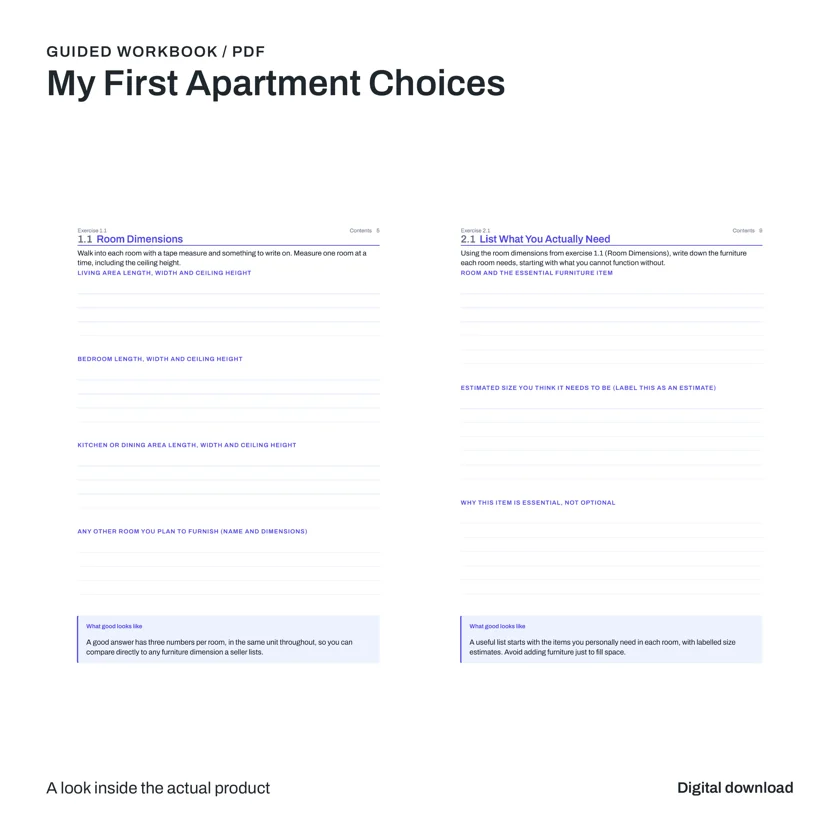
Test the journey from a mobile browser. Inspect the file after downloading it, not just the receipt. A successful checkout followed by an unreadable or incompatible file is still a failed customer experience.
Check the completed-purchase event, not just the pixel
Gumroad’s native TikTok Pixel integration documents ViewContent, AddToCart and CompletePayment events. Check the event naming actually used by your storefront before choosing or interpreting a purchase goal. Gumroad’s analytics integration guide.
Run an authorised test checkout or supported test mode and record the expected event, value and currency. Verify the event against the resulting order record. A pixel badge confirms less than a complete, observed purchase path. If your storefront cannot expose the event you need, resolve that limitation before treating campaign reports as sales evidence.
Add consistent campaign labels to your destination links so visits can be distinguished. For example, a seller could use utm_source=tiktok, utm_medium=paid_social and a campaign name describing the product. These labels help organise analytics; they do not themselves prove that a click became a paid order.
Test the explanation without changing the whole offer
Make two versions from the same product demonstration. One opens with the buyer’s task; the other opens with the finished page. Keep the product, price and destination consistent. This isolates a meaningful creative question without making you produce a different product for every advertisement.
Record which opening was used, the spend, visits, completed orders and refunds where observable. Calculate acquisition cost and the contribution left after variable costs. A video with more views can still produce fewer purchases. A cheap click from a curious viewer is not necessarily a useful customer visit.
- Define the commercial question and an affordable total test cap before launch.
- Confirm the product and destination are eligible for the chosen advertising route.
- Verify delivery and the completed-purchase event before interpreting campaign performance.
- Allow for the chosen attribution window and conversion delay when reviewing results.
- Pause immediately for broken checkout, a missing file or an ad that misrepresents the product.
Do not declare a winner from a handful of impressions or one order. Keep uncertainty visible. If the demonstration earns visits but people repeatedly misunderstand the format, repair the explanation before adding spend. If they understand it but do not value the offer, investigate the product and price rather than endlessly changing captions.
Common questions
Can I advertise a digital download without appearing on camera?
A screen recording, page walkthrough or hands-only demonstration can explain a product. The important question is whether the viewer can understand what they receive and how it is used, not whether the seller’s face appears.
Should I use a viral sound?
Use audio you are permitted to use commercially. Popularity does not establish advertising rights. The demonstration should remain intelligible with captions and without relying on a sound trend.
Can Stredy publish the TikTok ad for me?
No. Stredy helps create digital products and supporting sales assets. You manage the advertising account, creative upload, policy review, spend and campaign measurement separately.
Build the file, then film the useful part
Create a product around one consumer task, inspect its exported pages, and turn a real use into a short demonstration.
Start a product in Stredy →Plan your product firstEditorial note: AI-assisted writing reviewed against linked official platform guidance and documented product behaviour. Scenarios, sample ad copy and calculations are illustrative, not campaign results. Featured artwork is an AI-generated editorial illustration; the interior product samples are actual Stredy exports. Neither demonstrates sales performance. Platform features and eligibility can change. Stredy publishes this guide and offers a paid product-creation service, not advertising management.